
Choosing where your child will spend their earliest learning years can feel overwhelming. You want a place that balances care with education, safety with exploration, and structure with play. At Bright Beginnings Academy, we offer comprehensive programs including infant care, toddler care, preschool, and Pre-K in Burnsville that go beyond basic supervision to provide foundational early education.
Understanding what nursery school truly offers helps you make the right decision for your family. This guide clarifies what nursery school is, who it serves, and why it matters for your child’s development.
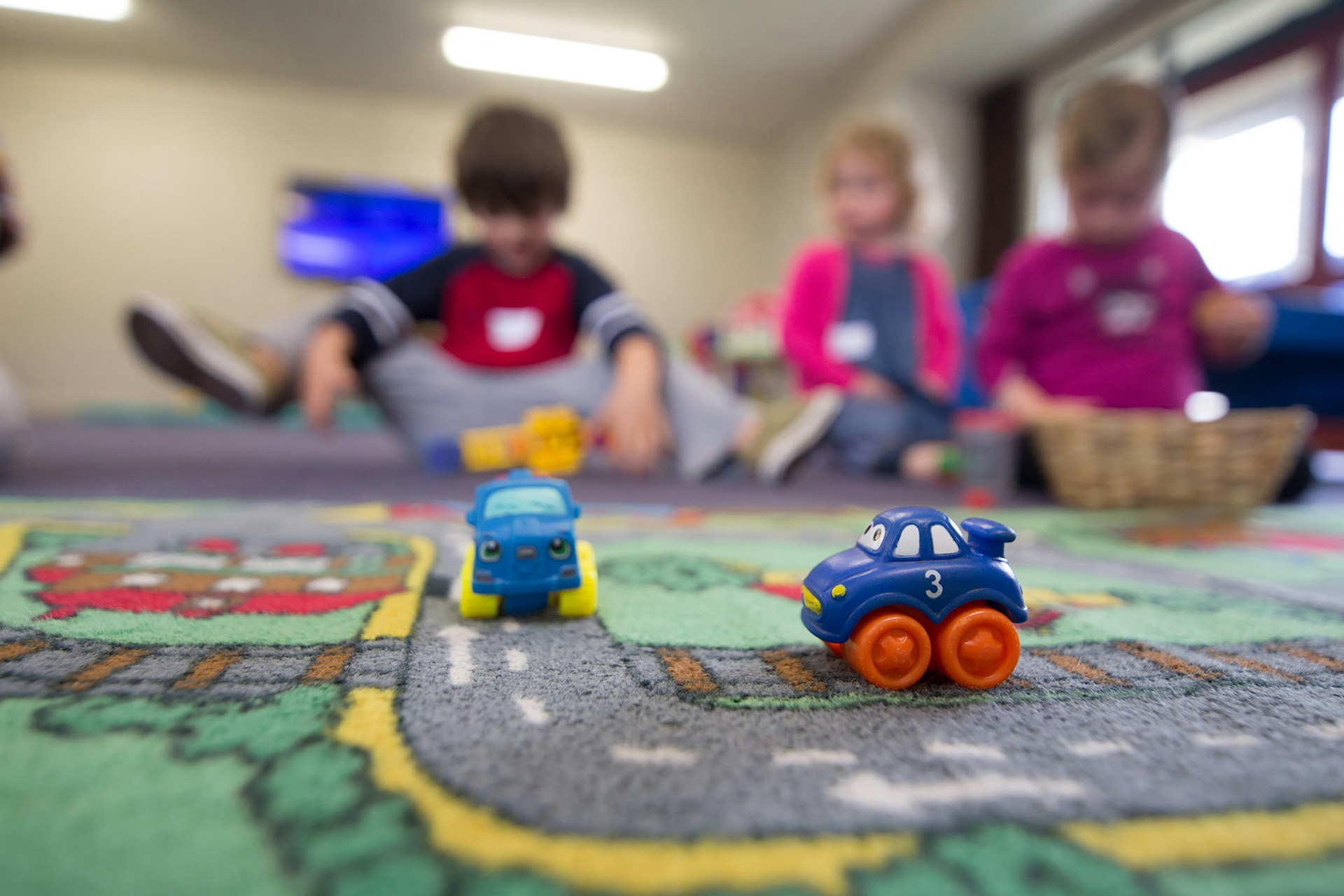
A nursery school is a specialized educational setting created for young children during their earliest developmental years. Unlike basic daycare, which focuses primarily on supervision, nursery school serves as a bridge between home and formal schooling, emphasizing foundational learning through play-based activities.
The purpose of nursery education extends way beyond childcare. These programs create secure spaces where toddlers build confidence through guided activities and interactions with peers. Trained caregivers watch each child’s progress while encouraging independence at developmentally appropriate paces. The structure stays flexible enough for children to explore naturally, building crucial motor skills and social awareness through everyday experiences.
Quality nursery programs take a whole-child approach. Rather than pushing formal academics, they recognize that young learners need emotional security before they can thrive intellectually. This foundation shapes how children approach learning throughout their lives.
Most nursery schools serve children from 18 months to 3 years old, though some programs begin as early as six weeks with infant care. This window captures the crucial period when children transition from complete dependence to emerging independence.
Readiness varies significantly between individual children and families. Some families enroll infants when returning to work, while others wait until toddlers show genuine interest in peer play. The nursery age group typically includes children who walk confidently, communicate basic needs, and demonstrate curiosity about their surroundings.
Figuring out when your child is ready involves observing specific behaviors. Children who engage in imaginative play show cognitive growth that benefits from structured activities. Similarly, toddlers who follow simple instructions like “bring me the ball” demonstrate they can participate in group settings.
Social curiosity indicates readiness. Children who watch other kids with genuine interest or attempt to join their play signal they’re ready for regular peer interaction. Communication frustration often means children are ready to develop better language skills in supportive environments. Most children display a few indicators rather than all signs simultaneously, which typically suggests they’re ready for nursery school.
Nursery education uses play as its primary teaching method because young children learn best through hands-on exploration. During typical days, children might engage with water tables, sensory materials, or varied textures that build neural connections through discovery. Arts and crafts activities develop fine motor skills while encouraging self-expression.
These activities introduce early academic concepts naturally. Sorting toys by color teaches classification. Stacking blocks demonstrates spatial relationships and basic physics. Group games incorporate counting and pattern recognition without formal instruction. This approach builds positive attitudes toward learning because children associate education with enjoyment rather than pressure.
Nursery school serves as training ground for essential life skills. Children learn to share, take turns, and use words to express feelings. These interactions teach empathy as children recognize that peers have their own emotions and needs.
Emotional development occurs through consistent routines and responsive care. When caregivers help children name emotions, they build self-regulation skills that serve them throughout life. Learning to wait patiently or handle minor disappointments in safe settings prepares them for bigger challenges ahead.
These terms create confusion because they’re used interchangeably. Understanding the distinctions helps you select the right fit for your family.
| Aspect | Nursery School | Preschool | Daycare |
| Primary Focus | Formal early education curriculum for toddlers (ages ~2-4) | Academic prep for kindergarten (ages 3-5) | Custodial care, flexible full-day supervision |
| Schedule | Often part-day (e.g., 3-4 hours) | Part- or full-day, school-like hours | Full-day (extended hours available) |
| Structure | Teacher-led classroom with play-based academics | Structured lessons, kindergarten transition | Play and basic care, less formal curriculum |
| Licensing | Regulated as educational child care | Often licensed preschool programs | Licensed child care centers |
Nursery school focuses on the youngest learners, prioritizing emotional security and social interaction for children roughly 18 months to 3 years old. The environment remains informal with minimal structured academics, emphasizing comfort and confidence building.
Preschool serves children ages 3 to 5 with more structured learning that prepares them for kindergarten. Preschool introduces letter recognition, counting, and foundational academic skills through intentional curriculum with specific learning times.
Daycare primarily offers supervision and basic care across broader age ranges. While quality daycare centers provide engaging activities, their main purpose is keeping children safe during work hours rather than following educational plans. Private nurseries typically offer smaller ratios, specialized curriculum, and staff with early childhood education training.
Attending nursery school accelerates social development through daily peer interactions. Children practice forming friendships, working through conflicts, and reading social cues. They discover that different families have different rules, expanding their understanding beyond home.
Independence develops naturally in group settings. Children who learn to put on their own coats or wash hands independently gain confidence in their abilities. These accomplishments create a sense of competence that encourages further independence. By kindergarten, children from quality nursery programs typically handle transitions more smoothly and adapt to new situations with less stress.
Collaborative play teaches children to negotiate, compromise, and work toward shared goals. These skills transfer directly to classroom success and lifelong relationship building.
Research consistently shows that children attending quality early education programs enter kindergarten better prepared. They’re familiar with classroom routines like circle time, following directions, and participating in group activities. This familiarity reduces anxiety and lets them focus on learning rather than adjusting to unfamiliar environments.
Nursery-level education introduces children to structured learning rhythms without overwhelming them. They develop attention spans that allow them to engage with stories, complete tasks, and maintain focus on activities. These executive function skills prove crucial for academic success.
The foundation includes self-help skills that kindergarten teachers expect. Children who handle bathroom needs independently, open lunch containers, and organize belongings feel more capable among peers and facilitate smoother classroom operations.
Quality nursery programs maintain several key characteristics. First, verify caregiver qualifications and child-to-teacher ratios. Licensed staff with early childhood credentials ensure adequate attention and supervision for each child. Staff should demonstrate genuine warmth when interacting with children.
The physical environment reveals program priorities. Look for clean, safe spaces with age-appropriate materials that encourage exploration. Room layouts should include quiet areas for rest and active spaces for movement, recognizing young children’s need for variety.
Watch how caregivers handle challenging moments. Quality programs respond to upsets with patience and redirection. Check children’s faces for engaged, happy expressions indicating comfort and interest. Ask about daily schedules and curriculum approaches. While flexibility matters, some structure helps children feel secure.
Communication practices significantly impact family experience. Quality programs provide regular updates about your child’s day and welcome parent questions. Consider whether facilities offer continuity through infant care, toddler care, preschool, and Pre-K programs, allowing children to grow within familiar environments.
Ready to see what quality nursery care looks like? Visit our Ages & Stages page to explore how we support each developmental level, or contact us to schedule a tour.
Families throughout Burnsville and the greater Minneapolis area choose us because we understand that quality early education shapes children’s entire futures. We offer comprehensive programs including infant care, toddler care, preschool, and Pre-K education, allowing your child to grow within our community from earliest weeks through kindergarten readiness.
Our nursery program emphasizes educational benefits at every age through developmentally appropriate activities that stimulate cognitive growth while ensuring children feel secure and valued. Our Burnsville location at 100 Cobblestone Lane provides a safe, nurturing environment open Monday through Friday from 6:30 AM to 6:00 PM.
We provide personalized attention to each child’s unique developmental journey, celebrating individual achievements rather than expecting uniform milestone timing.
Experience our environment firsthand by scheduling a visit to our Burnsville location. Tour our classrooms, meet our staff, and observe our curriculum in action. We’ll discuss your child’s specific needs and how our programs can support their development.
Our Plymouth location at 12325 W Highway 55 offers the same quality programs, giving families throughout the greater Minneapolis area options. Contact us at (763) 402-5239 or schedule your tour.
We’re here to answer questions, address concerns, and help you determine whether Bright Beginnings Academy aligns with your family’s values and your child’s needs.
Photo by BBC Creative on Unsplash