
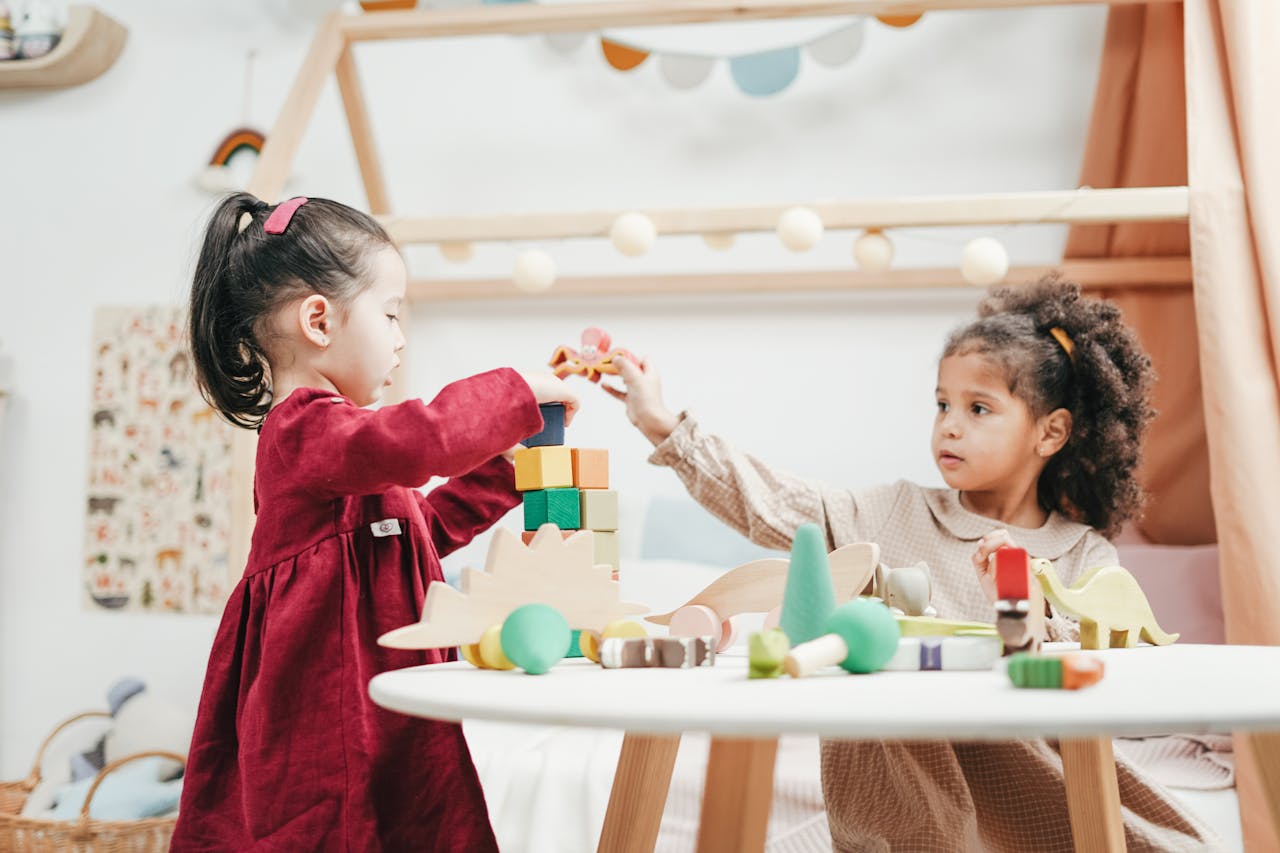
Think of preschool and pre-K as two different stepping stones on your child’s educational journey. Preschool is for younger kids who are new to group settings, while pre-K prepares kids for formal schooling.
The biggest differences show up in how these programs approach learning. Preschool leans heavily into play-based discovery and social skills, while pre-K is more like a kindergarten boot camp that’s structured, academic, and goal-oriented. Modern assessment systems in both programs use multiple evaluation methods, including ongoing observations, end-of-period checks, and game-based evaluations that look at the whole child’s cognitive, physical, emotional, and social growth.
Preschool typically welcomes kids from ages 2 to 4 years old. Pre-K is more for kids aged 4 to 5 years old. This reflects what kids can actually handle developmentally. Your preschooler is learning basic stuff, such as sharing toys and washing hands, while pre-K kids are ready to sit still longer and tackle more challenging tasks.
These programs help kids develop social skills and prepare them for more structured learning, which is why they’ve become more popular over the years. You should check your state’s kindergarten cutoff dates and rules, as this can affect your decision. In Louisiana, for example, kids who turn 5 by September 30 are required to attend kindergarten. For those born in October, they’ll need to wait another year even if they’re ready to read chapter books.
Preschool feels more like an extended playdate with learning sprinkled in. Kids spend time in dramatic play corners, finger painting, and learning to take turns. It’s all about socializing, getting comfortable in group settings, and picking up basics such as colors, shapes, and letters through hands-on activities. Kids learn naturally while they’re having fun. Pre-K shifts to dedicated reading times, math centers, and actual lessons with learning objectives. Kids follow structured schedules similar to what they’ll face in kindergarten. Children in full-day pre-K programs develop stronger social-emotional skills and are nearly three times less likely to repeat a grade.
Walk into a preschool classroom, and you’ll see activity centers scattered around — blocks here, dress-up clothes there, books everywhere. The daily routine follows a loose schedule. Story time might run long if kids are engaged, and snack time could turn into an impromptu lesson about healthy foods. There’s flexibility built in because 3-year-olds don’t always stick to schedules.
Pre-K classrooms have designated learning areas, group meeting spaces, and schedules posted on walls. Kids rotate through centers on timers. They’re expected to sit for 15-20 minute lessons and handle transitions without issues. The structure mimics elementary school on purpose. Pre-K programs typically maintain about one teacher for every 10 children, while preschool programs have roughly one teacher for every eight children. High-quality programs keep class sizes at 20 students max with staff-child ratios of 1:10 or better.
Pre-K teachers often need bachelor’s degrees in early childhood education plus state certifications. They’re essentially elementary school teachers specializing in little kids. The requirements include maintaining GPAs between 2.5 and 3.0, passing state exams, and completing supervised student teaching.
In New York, only teachers with New York State certification can apply for certain New York City Public School positions. Study Plan Lead Teachers need bachelor’s degrees in early childhood education and must complete New York State Early Childhood certification within three years. Quality early childhood programs should employ teachers with bachelor’s degrees in early childhood education.
Preschools typically offer flexible schedules, including half-day programs or two days a week. Many centers offer extended care for working parents who can’t pick their kids up at noon. It’s all about flexibility because families have different situations.
Pre-K programs tend toward more school-like schedules. You’ll find both half-day and full-day options, but full-day programs are gaining popularity for good reason. They provide more time for skill development and deeper learning experiences. Quality early childhood programs often recommend full-day options over half-day programs because kids get more comprehensive kindergarten preparation.
Picking between preschool and pre-K isn’t a one-size-fits-all decision. Your child’s age, personality, and developmental stage all matter. At Bright Beginnings Academy, we understand how overwhelming these decisions can feel. Our early childhood education programs bridge preschool and pre-K preparation, supporting families through this big transition. Your child’s educational journey starts with these early choices, so schedule a tour to see our learning environments in person.
Image by cottonbro studio is licensed with Pexels License