
Developing social skills is a lifelong practice. As adults, many of us have moments when we need to hone our communication skills and manage our emotions. Even though we still develop interpersonal skills in adulthood, it’s never too soon to get started. In fact, early childhood social development is crucial, as it impacts a young person’s life in their early years and all through adulthood. If you’re a parent interested in learning how to develop social skills in kids, here’s what you need to know.
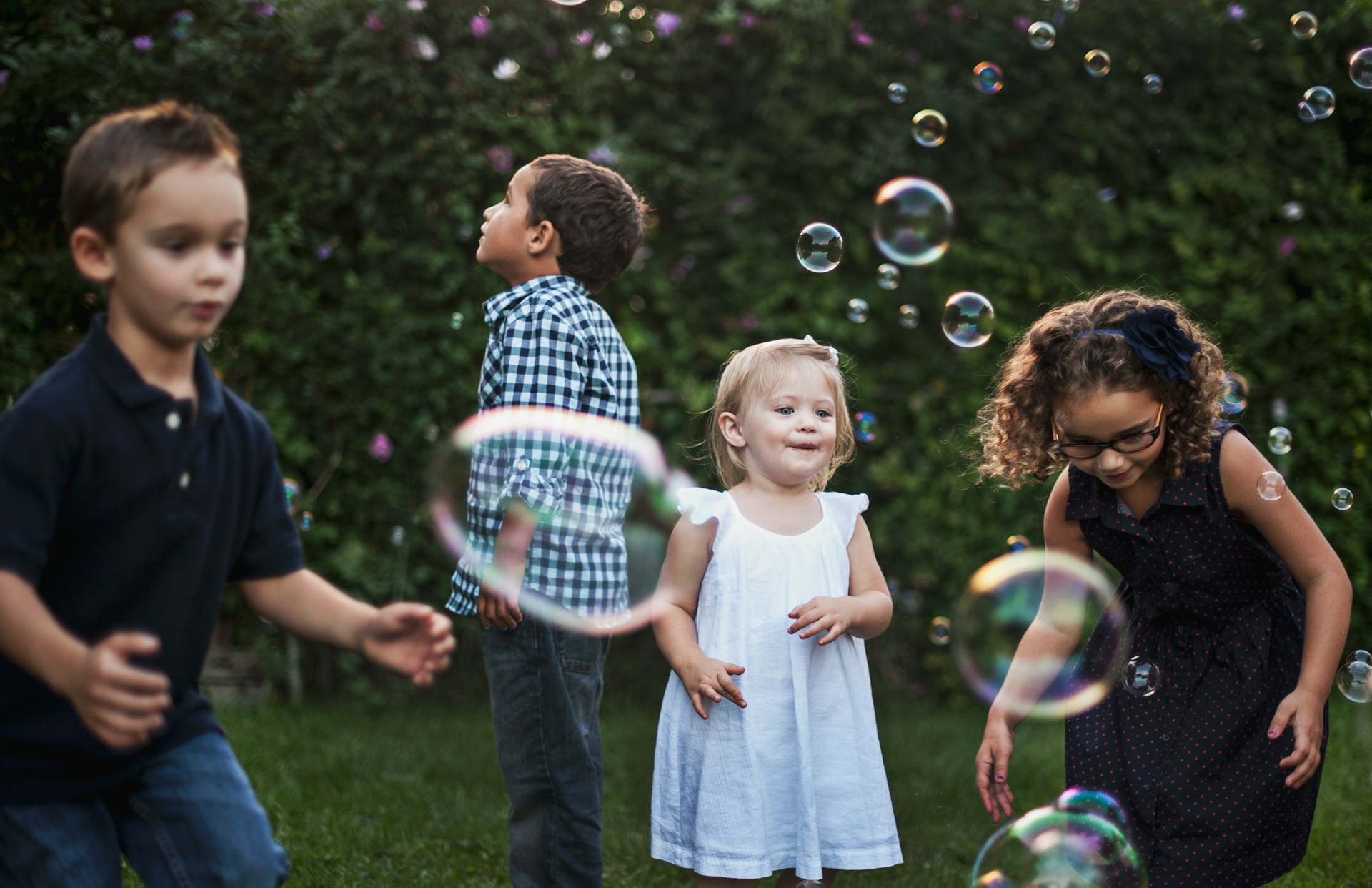
To begin, make sure that your children have daily opportunities to practice their social skills. A good way to do this is through imaginative play. You and your child probably already enjoy this type of activity. Many children pretend to run kitchens or schools. These creative games are fun for kids and teach them essential social skills.
When kids pretend to be in different group scenarios, they sharpen conflict resolution, problem-solving, and collaborative abilities. As they play, they have the opportunity to take on different roles in safe environments. As a parent, make it a goal to set aside some time each day for this type of activity.
As your child role-plays in situations involving peers, observe them and make a note of things you can help them with. If your kid is hanging back in a group, or doesn’t know how to react in certain situations, you can provide gentle suggestions, mentally referencing the impressions you had while you watched them with other kids. For example, give them phrases they can say to endear themselves to others.
The key is giving your child plenty of time to learn to problem-solve and communicate. The more time you set aside for social practice through imaginative play, the better your child can develop their social skills over time. The formative years (1 to 5 years old) really matter, as kids who have psychosocial issues tend to develop more serious conduct problems between the ages of 4 and 17, as per a study published in Scholar.
Another key aspect of social skill development is emotional intelligence. Emotional intelligence refers to the ability to recognize our own emotions and the feelings of others. Being able to name their feelings is essential for children. It gives them a tool for communicating what they’re experiencing and helps them to react appropriately.
A good way to do this is by identifying emotions in others when opportunities arise. For example, if another child seems sad, you can privately discuss their frown or tears. You can even do this while watching educational kids’ programming or reading children’s books. This way, your kid begins to associate those facial changes with certain emotions.
Verbalizing your own feelings can also help your child. When you’re having a good time playing, tell them, “I am having fun!” Then, encourage your little one to reciprocate. Ask them how they are feeling at different times throughout the day. Focusing on emotional awareness, within a child and within others, will make it easier for your kid to develop emotional intelligence and talk about feelings.
Lastly, you can focus on developing your child’s empathy for others. Empathy is essentially putting yourself in someone else’s shoes to imagine how they might feel. Try asking your child about different scenarios and how they might feel in them.
Role-play various situations so your child can practice empathy in a safe environment. For instance, you might ask your child how they would feel if another kid took their toy without asking first. By practicing this common scenario at home, you not only help your child develop skills for addressing the situation, but minimize the risk of them misbehaving.
Stories are another good opportunity to practice empathy. As you’re reading a book, ask your child to place themselves in the role of one of the characters. Ask them how the character must be feeling or how they would handle a situation presented in a book. This is another form of role play that you can easily integrate into your current activities.
Looking to boost your child’s social development with some fun activities and games? Here are some activities to improve their social skills:
These are just a few ways you can keep your child engaged while also improving their social skills. There are many other options available. The key is to work the development of social skills into the activity by encouraging your children to communicate and think about their emotions in different scenarios.
Improving social skills happens over time with committed practice. To ensure your child continues to develop their social skills, it’s important to choose a daycare system that encourages play and interaction among kids. At Bright Beginnings Academy in Plymouth, Minnesota, we recognize the importance of developing social skills from a young age. Our teachers implement many of the strategies and activities mentioned above each day in our programs and summer camp, ensuring your child gets the practice they need. They also get the chance to interact with other children their age, where they can further practice their skills and develop friendships.
To learn more about what Bright Beginnings Academy has to offer, please contact us today. We’d be happy to answer any questions or schedule a time for you to take a tour of our facilities.