
Flour dusting every surface, eggshells scattered across the counter, and your three-year-old proudly announcing they’ve “improved” your cookie recipe with an entire cup of sprinkles. Messy? Absolutely. Worth it? Without question. Baking with preschoolers transforms your kitchen into a laboratory of learning, creativity, and connection. The developmental gains and family memories you’re creating will last far longer than the flour footprints on your floor.
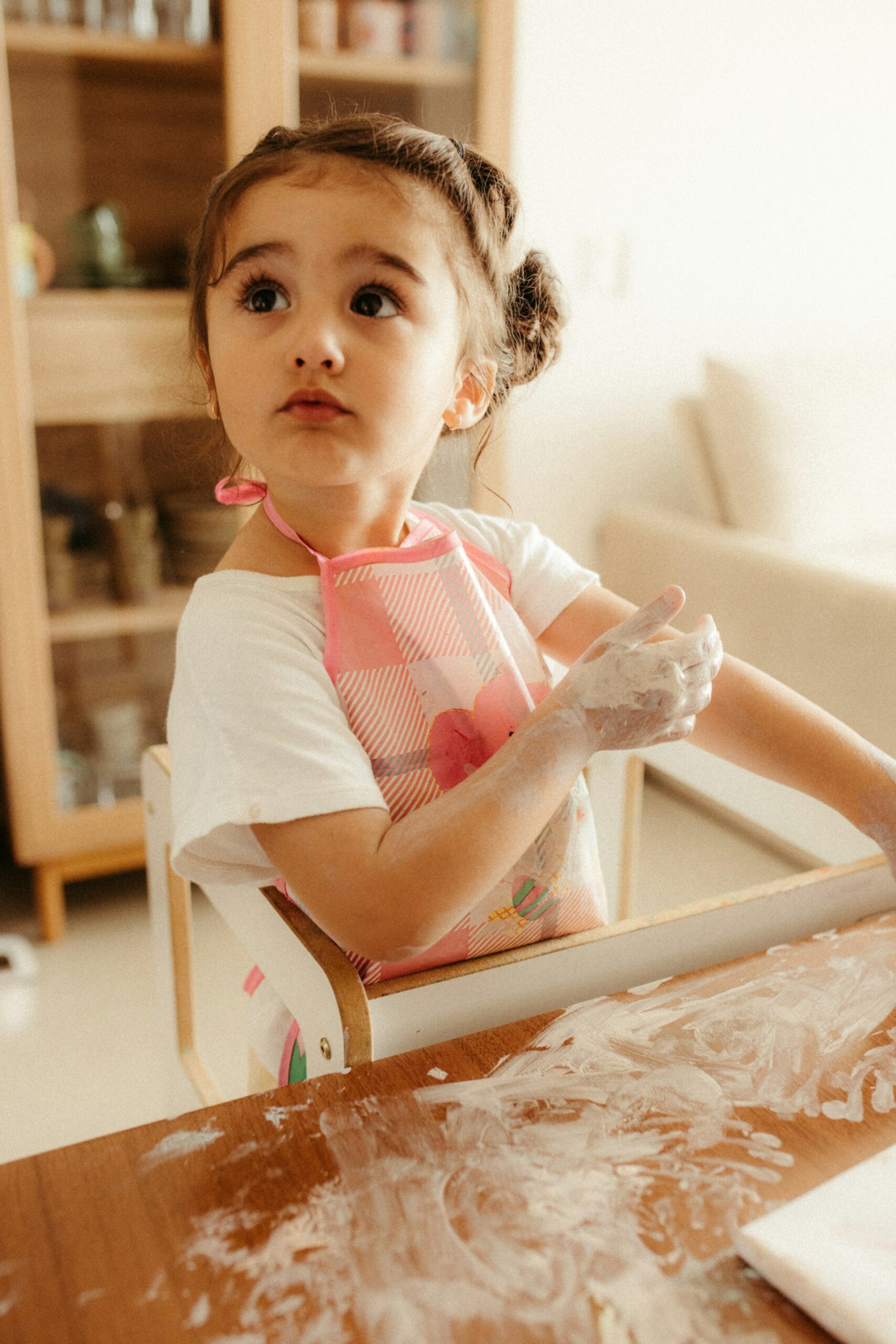
When your preschooler asks to help make cookies, they’re really asking for a chance to grow. Measuring flour isn’t just about cooking; it’s building math skills that’ll serve them later. Following recipe steps? That’s reading readiness and learning how things go in order. All that stirring develops the hand muscles they’ll need for writing someday.
What we love about baking with kids: these aren’t separate lessons you have to plan. They just happen naturally while you’re having fun together.
The sensory stuff alone makes it worthwhile. Your child gets to feel rough sugar crystals, smooth butter, sticky honey. They smell vanilla extract and take in all those wonderful aromas. They watch solid ingredients become liquid batter, then transform back into solid cookies. This kind of hands-on exploration builds connections in their brain that support learning everywhere else.
Baking helps with fine motor skills, language growth, math concepts, creativity, patience, confidence, and working as a team. Your preschooler learns to wait (not easy!) while cookies bake. They figure out resilience when something doesn’t turn out quite right. They practice sharing ingredients and treats with everyone. These emotional skills matter just as much as the academic ones and help prepare them for our Burnsville childcare programs.
Language development happens without you even trying. Your child picks up new words like “whisk,” “fold,” and “sift.” They practice following directions and asking questions. They describe how things feel, taste, and smell. When you talk through what you’re doing together, you’re modeling the kind of complex sentences they’ll use eventually.
Safety lets kids explore with confidence instead of fear. Start with clear rules about hot stuff. The oven and stovetop? Those are grown-up only zones, no exceptions. You can let them peek at cookies through the oven window, but touching hot surfaces is off limits.
Make hand washing your opening and closing ritual every single time. Keep paper towels where your child can reach them. Spills will happen, and when kids can clean up their own small messes, they feel capable and independent. Get a sturdy step stool so they can actually reach the counter comfortably.
The right tools make everything easier. Plastic measuring cups won’t break when dropped. Silicone spatulas and wooden spoons are light enough for small hands and safe for enthusiastic mixing. Cookie cutters with smooth edges let them make shapes without worry. A child-sized apron makes them feel official while protecting their clothes.
Keep the sharp stuff, electric mixers, and food processors in adult hands. But here’s a tip: narrate what you’re doing when you use these tools. They still learn the process even if they can’t do that step themselves. You can buy child-safe plastic knives for cutting soft things like bananas.
Before your preschooler joins you, measure ingredients into small bowls. This setup lets them jump right into the fun parts instead of waiting while you search for the vanilla extract. It also prevents the “oops, we already added that” moments when eager hands pour before you’re ready.
Pick recipes with just a few steps and ingredients. Most preschoolers can focus on a single activity for roughly 6 to 12 minutes, depending on their age and interest level. Projects that wrap up in this window keep everyone happy instead of cranky. Choose forgiving recipes too. Cookies and muffins can handle small measuring mistakes much better than fancy cakes.
Cover your workspace with something washable or use parchment paper to catch spills. Keep a damp cloth handy for sticky fingers. Clear your whole afternoon, including cleanup time, so you can let your child work at their natural pace without rushing.
Matching jobs to abilities prevents meltdowns. Understanding developmental stages helps you give tasks kids can actually succeed at, which builds their confidence for next time.
Three-year-olds do best with simple, concrete jobs:
Keep instructions to one step at a time. “Pour the flour into this bowl” works way better than a whole list of things to remember.
Four-year-olds have better finger control and can handle trickier tasks:
They understand order well enough to follow two or three steps in a row and might even recognize some written recipe words.
The best recipes let your child do most of the work while keeping your stress level low. Focus on the process, not perfect results. The goal is learning and bonding, not magazine-worthy cookies.
No-bake options eliminate oven worries and waiting time:
Energy Balls: Mix oats, sunflower seed butter, honey, and chocolate chips. Your preschooler can handle almost everything here. They mix, they roll into balls, done. You can substitute other nut-free butters based on your family’s preferences.
Yogurt Parfaits: Layer yogurt with granola and fruit in clear cups. Your child becomes the artist, choosing colors and patterns. Great for teaching sequence while giving them creative control.
No-Bake Cookies: Combine oats with a chocolate-sunflower seed butter mixture. Kids can stir and drop spoonfuls onto wax paper. Instant gratification without the oven wait.
Sugar Cookies: Roll dough and cut shapes together. After baking and cooling, set up a decorating station with different colored icing and sprinkles. Now your baking project becomes an art project too.
Muffins: Basic recipes work with endless add-ins. Blueberries, chocolate chips, mashed bananas. Your preschooler stirs ingredients, fills muffin cups, picks toppings. Mini muffins cook faster and make perfect kid-sized portions.
Banana Bread: Kids can mash bananas, stir batter, and later decorate cooled slices with cream cheese. The recipe forgives measuring variations while teaching cause and effect.
Every baking session sneaks in early learning without feeling like school. Count chocolate chips as your child adds them. Practice matching by pairing cookies on a baking sheet. Name colors in sprinkles and fruit. Sort measuring cups from biggest to smallest.
Science happens naturally too. Watch baking soda bubble when it hits liquid batter. Talk about how heat changes raw dough into solid cookies. Simple observations like “Look how much bigger the cookies got!” plant seeds of scientific thinking.
Reading develops when you point to recipe words while saying them out loud. Your child learns that those marks on paper have meaning and follow an order. They start recognizing repeated words like “cup” and “mix.”
Accept that mess is part of the deal. When you laugh at spills instead of getting upset, your preschooler learns that mistakes are normal learning moments, not disasters.
Keep your expectations realistic. Your child won’t follow directions perfectly or work at adult speed. Celebrate small wins enthusiastically: “You got all the sugar in the bowl!” Save corrections for safety issues only.
Make cleanup part of the activity, not punishment afterward. Hand your preschooler a damp cloth to wipe counters while cookies bake. Let them sweep flour with a small broom. Turn it into a game by seeing how many dirty bowls they can carry safely. Music during cleanup keeps the mood light.
Take breaks when you need them. If your child gets overwhelmed, pause everything. Have a snack, read a book, step outside for fresh air. Some days you might need two separate sessions to finish one recipe. That’s totally fine.
Regular baking times create something special to look forward to. Maybe Friday afternoon cookies or Sunday morning pancakes become your thing. These routines give kids the structure they crave while guaranteeing family connection time.
Seasonal baking connects your family to the year’s rhythm. Heart cookies for Valentine’s Day, pumpkin muffins in fall, sugar cookies during holidays. Taking photos of your creations builds a record of your child’s growing skills over time.
Let your preschooler help choose recipes. Browse cookbooks together or look through recipe cards as a family. When kids pick the project, they invest more energy in seeing it through. Start a family recipe box where your child files their favorites.
Baking with preschoolers takes patience, flexibility, and a willingness to embrace controlled chaos. But the rewards stretch far beyond whatever treats you create. Every session builds cognitive, social, emotional, and physical skills. You’re teaching math, science, and literacy without workbooks or pressure. Most importantly, you’re showing them their contributions matter and that learning happens through joy, not just instruction.
At Bright Beginnings Academy, we weave hands-on activities like cooking and sensory play into our curriculum because we see their developmental value firsthand. If you’d like to schedule a tour of our Burnsville location and see how we make learning engaging for preschoolers and Pre-K students, we’d love to show you our approach in action.
So gather your ingredients, protect your counters, and invite your preschooler to join you. Yes, the kitchen will get messy. The cookies might turn out lopsided. Your child will probably eat more chocolate chips than actually make it into the batter. But you’ll create something more valuable than baked goods. You’re building memories, skills, and a relationship that will nourish your child long after the last crumb is gone.
Photo by Jonathan Borba on Unsplash